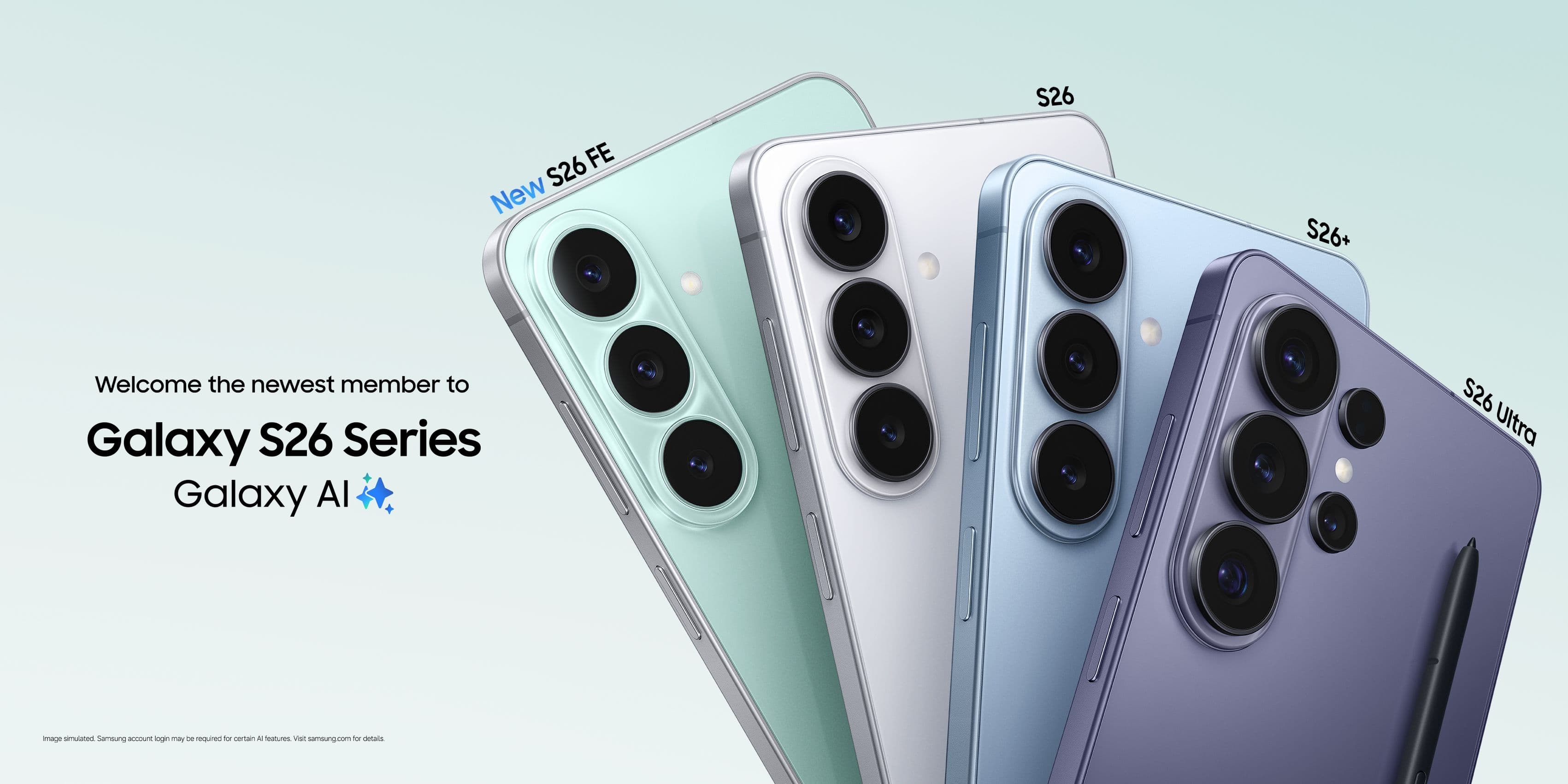
Samsung’s Galaxy S26 FE brings several of the company’s flagship features to a more accessible member of the S26 family. It is also the first phone in the lineup to ship with One UI 9, making Samsung’s latest software and context-aware AI features a central part of the device rather than a later update.
The phone will be available in select markets from September 4 in Blueberry, Graphite, and Pistachio.
A camera designed around easier creation
The Galaxy S26 FE has a triple rear-camera system led by a 50-megapixel wide camera. It also includes a 12-megapixel ultra-wide camera and an 8-megapixel telephoto camera with 3x optical zoom. A 12-megapixel front camera is intended to capture wider selfies and make group shots easier to frame.
Many of the more notable changes concern what happens during and after recording. My FanCam can follow a selected person and automatically adjust the framing as they move. This could make the feature useful for performances, sports, and other situations where manually tracking a subject is difficult.
Samsung has also added Super Steady with Horizontal Lock, which is designed to keep video level during movement. Its Nightography processing handles low-light photography, while Photo Assist lets users modify images with natural-language instructions. According to Samsung, users can add or restore elements, change the appearance of a scene, and review or reverse individual editing steps.
Gemini Omni extends these tools into video creation by turning photographs and clips from the Gallery into edited, shareable videos.
One UI 9 makes AI more proactive
One UI 9 introduces features intended to surface information before users explicitly search for it. The updated Now Brief can present personalised cards containing information such as weather and wellness insights. Users can also create their own briefing cards with a prompt.
Now Nudge expands this idea by providing timely suggestions through selected third-party applications and notifications. Circle to Search with Google can identify several items within the same image, reducing the need to search for each object separately.
These additions show Samsung moving Galaxy AI beyond isolated editing tools. The larger goal is an interface that interprets context, routines, and visible information across the device. Its usefulness will depend on whether suggestions are consistently relevant and whether users retain clear control over the information used to produce them.
Flagship essentials with long-term support
The Galaxy S26 FE has a 6.7-inch Dynamic AMOLED 2X display with a refresh rate of up to 120Hz and brightness of up to 1,900 nits. It runs on Samsung’s 3-nanometre Exynos 2500 processor and is available with 8GB of memory and 128GB, 256GB, or 512GB of storage.
A 4,900mAh battery supports 45W wired charging. Samsung says the phone can reach approximately 69% charge in 30 minutes when used with a compatible adapter, which is sold separately. It also supports 15W wireless charging and Wireless PowerShare.
Samsung is promising seven generations of operating-system upgrades and seven years of security updates. That commitment may be one of the phone’s most meaningful features, particularly for buyers who want a less expensive Galaxy device without accepting a short support period.
The S26 FE therefore represents more than a reduced flagship. It shows Samsung treating software longevity, AI assistance, and computational photography as standard parts of the Galaxy S experience. The important question will be how much of that premium experience survives differences in processor performance, camera hardware, regional availability, and final pricing.